
How to Identify and Mitigate Algorithmic Bias: 2026 Best Practices

As of 2026, AI ethics has transitioned from voluntary corporate “principles” to enforceable global standards. The defining event of the year is the full implementation of the EU AI Act’s high-risk obligations (effective August 2026), which mandates strict transparency and human-in-the-loop protocols for critical infrastructure, healthcare, and finance. Simultaneously, countries like India have notified the IT Rules Amendment 2026, introducing a 3-hour takedown window for illegal deepfakes and mandatory watermarking for all synthetic content. For businesses and individuals, 2026 is the year of “Responsible AI by Design,” where auditability, bias mitigation, and data provenance are no longer optional—they are the baseline for digital trust.
1. The Regulatory Shift: From Aspiration to Enforcement
The “Wild West” era of unregulated AI officially ended in early 2026. Global regulators have moved from debating definitions to issuing multi-million dollar penalties for non-compliance.
The EU AI Act: The August 2026 Deadline
The EU AI Act is currently the world’s most influential framework. While general-purpose AI rules took effect earlier, the most stringent requirements for “High-Risk” systems apply starting August 2, 2026.
High-Risk Categories: AI used in critical infrastructure (energy, water), medical diagnostics, recruitment, and credit scoring must now pass a rigorous “Conformity Assessment.”
Penalties: Failure to comply can result in fines up to €35 million or 7% of global annual turnover, making AI compliance a boardroom priority rather than a niche IT issue.
India’s IT Rules Amendment 2026
In February 2026, the Union Government notified significant changes to the Information Technology Rules. This amendment specifically targets Synthetically Generated Information (SGI).
The 3-Hour Rule: Platforms must remove illegal deepfakes or impersonation content within 180 minutes of a court or government order.
Mandatory Provenance: Every AI-generated image or video must now have embedded metadata (digital fingerprints) to trace the content back to its source tool.
2. The Battle Against Algorithmic Bias
In 2026, we have moved beyond simply identifying bias to actively “debugging” it through Continuous Lifecycle Auditing.
Bias in Healthcare and Finance
As we explored in our guide to AI in Medical Diagnostics 2026, the stakes are life-altering.
The Feedback Loop Problem: In 2026, researchers have flagged a “Feedback Loop” where AI systems trained on previous AI-generated data begin to amplify societal stereotypes.
Technical Mitigation: Leading firms now use Federated Learning to train models on diverse, real-world datasets without compromising individual privacy.
Domain Disaggregation: Models in 2026 are required to show “Fairness Metrics” disaggregated by demographic groups (race, gender, age) to ensure a high-performing model for one group isn’t hiding a failure for another.
Human-Centered AI Frameworks
The NCAIC’s 2025–26 Framework emphasizes that AI should be a complement, not a replacement. In 2026, the term “Meaningful Human Control” has become a legal standard. If an AI agent makes an autonomous decision in a high-stakes environment (like firing an employee or denying a loan), there must be a clear, explainable path for a human to override and audit that decision.
3. Generative AI Ethics: Copyright and Personal Dignity
The explosion of generative models has forced a re-evaluation of what constitutes “fair use” and “personal identity.”
The Deepfake Crisis of 2026
Deepfakes are no longer just a celebrity problem; they are a tool for sophisticated financial fraud and political disinformation.
The 2026 Solution: Major platforms (Meta, X, YouTube) have implemented Automated AI Filters that check every upload against a database of known “Synthetically Generated” markers.
Labeling: In 2026, it is legally required for AI content to have a visible watermark (for video) or a spoken disclaimer (for audio).
Intellectual Property & Training Data
The 2026 “Fair Training” movement has led to new compensation models. Large Language Model providers must now publish a public summary of training content, disclosing the datasets used to build their models. This transparency allows creators to “opt-out” or negotiate licensing fees for their work.
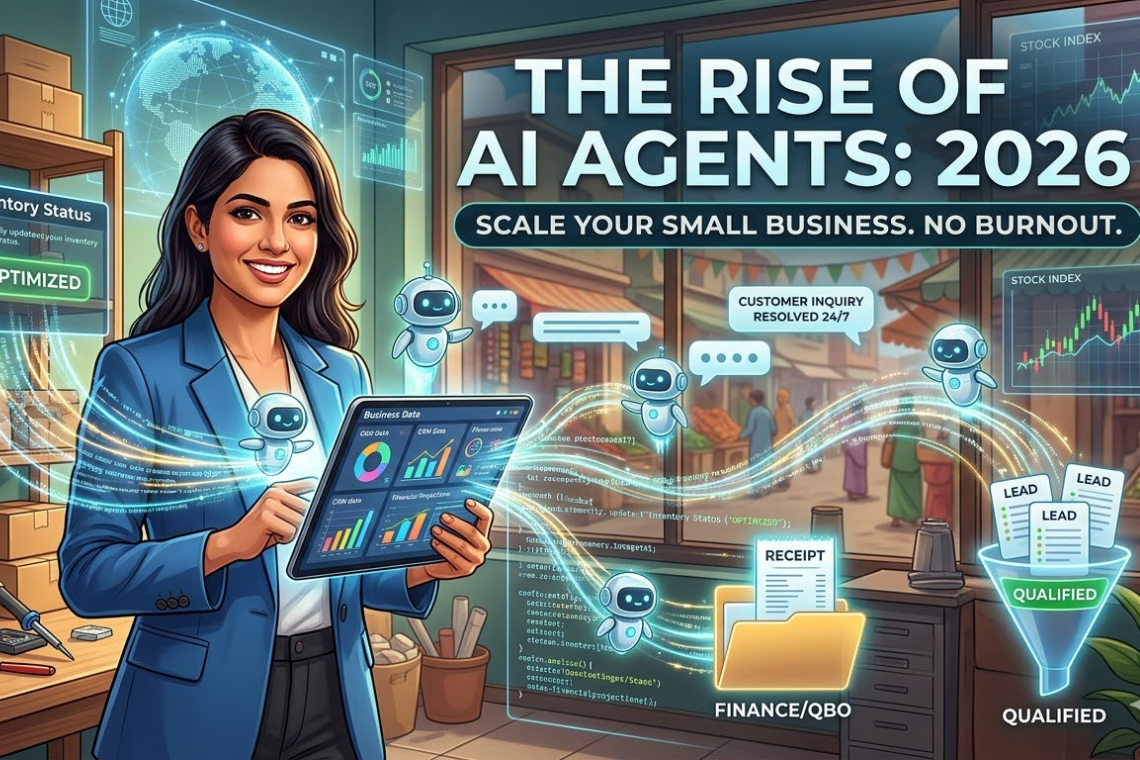
Internal Expert Strategy: As AI agents become more prevalent in daily operations, ethical compliance is a competitive advantage. To see how to deploy these agents responsibly in your business, read our guide to The Rise of AI Agents for Small Business.
4. The Ethics of AI Agency and Autonomy
In 2026, we have moved from “Chatbots” to “Autonomous Agents” that can book travel, execute trades, and manage schedules.
Agentic Accountability
Who is responsible when an AI agent makes a mistake?
The 2026 Legal Consensus: Legal “personhood” for AI has been flatly rejected by most global governments. Accountability always flows back to the Deployer (the person or company using the tool) or the Provider (the developer of the tool).
Vibe Coding & Error Logic: As we noted in our guide to How to Use Excel AI Agents in 2026, the shift to natural language programming (Vibe Coding) requires a higher level of AI Literacy. The user is now the “Architect of Ethics,” responsible for ensuring the prompts they provide do not violate safety or privacy guidelines.
5. Security and Data Sovereignty: The Private AI Movement
The 2026 ethical landscape is increasingly defined by Local AI. To avoid the “Data Leakage” risks of public clouds, enterprises and individuals are moving toward “On-Premise” intelligence.
Privacy by Design: By 2026, the most ethical AI tools process sensitive data locally. This is a critical feature for those managing sensitive financial info, as discussed in our Crypto Tax Laws 2026 guide.
Localized LLMs: To understand how to run powerful AI without sending your data to the cloud, see our Comprehensive Guide to Open Source LLMs.
FAQ: AI Ethics and Regulation (2026)
Q: Can I get in trouble for posting an unlabeled AI image? A: Under the 2026 IT Rules and the EU AI Act, yes. If your content is “Synthetically Generated” and intended for the public, you must label it. Failure to do so can lead to platform bans or, in cases of malicious deception (deepfakes), criminal charges.
Q: What is a “Human-in-the-Loop”? A: This is a requirement where high-risk AI decisions must be reviewed by a human before being finalized. In 2026, you cannot automate a “final” decision that impacts someone’s life (like a medical diagnosis or a loan denial) without a human signature.
Q: Does the EU AI Act affect me if I live in India or the USA? A: Yes. Much like GDPR, the EU AI Act has “Extra-territorial” reach. If you provide an AI service that is used by residents in the EU, you must comply with their standards or risk being blocked from one of the world’s largest markets.
Q: Is AI bias finally solved in 2026? A: No. Bias is a “Social-Technical” problem, not just a technical bug. While our 2026 tools for detecting bias are significantly better, the underlying data often reflects historical human prejudices that require constant monitoring and human judgment to correct.
Summary: Building a Trust-First Future
The story of AI ethics in 2026 is the story of Human Agency. We have realized that the most powerful technology on Earth requires the most robust guardrails. By prioritizing transparency, fairness, and accountability, we aren’t just complying with laws—we are building the foundation of a society where humans and AI can collaborate safely.
Next Step: Protecting your data is the first step toward ethical AI use. Ensure your financial data is secure by reading our 2026 Global Guide to High-Yield Savings vs. ETFs or plan a safe getaway with our 2026 Budget Travel Report.