
How to Understand the HDFC Bank Governance Review

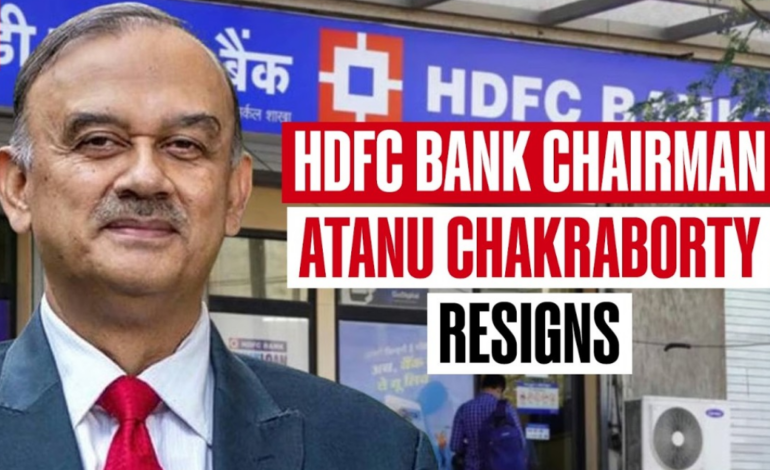
In the world of high-finance, words like “values” and “ethics” are rarely used in resignation letters unless there is a significant underlying rift. When Atanu Chakraborty—a former Economic Affairs Secretary and a veteran of the Indian administrative service—stepped down on March 18, 2026, citing a misalignment with the HDFC bank’s “happenings and practices,” it triggered an immediate crisis of confidence.
1. The Timeline of the Crisis: March 2026
To understand how to react, investors must first understand the rapid sequence of events that led to the current legal review.
March 17, 2026: Atanu Chakraborty drafts his resignation letter, citing that certain practices observed over the last two years did not align with his personal values.
March 18, 2026: The letter is formally received by the bank. HDFC Bank notifies the stock exchanges of the abrupt exit, causing an immediate 7-9% drop in its share price.
March 19, 2026: The Reserve Bank of India (RBI) moves swiftly to ensure stability, approving Keki Mistry (former HDFC Ltd CEO) as the interim Part-time Chairman for a three-month tenure.
March 23, 2026: The Board of Directors meets to address the growing governance concerns. They approve a “proactive” step to appoint external law firms to conduct a formal review.
March 24, 2026: HDFC Bank officially announces the appointment of these firms to provide an objective, fact-based assessment of the claims.
2. Learn the Steps: How HDFC Bank is Reviewing the “Values and Ethics” Claim
The bank’s decision to bring in external legal counsel is a strategic move to “fight the ghost” of unspecified allegations. Here is how the 2026 review process is structured.
Step 1: Appointment of Dual Counsel
HDFC Bank has appointed both domestic and international law firms. This dual-layered approach is designed to satisfy both local regulators (RBI/SEBI) and global institutional investors, particularly those holding the bank’s American Depositary Receipts (ADRs).
Step 2: The Scope of the Investigation
The law firms have been tasked with:
Decoding the Resignation: Analyzing the “two contentious lines” in Chakraborty’s letter that referenced ethical misalignment.
Interviewing the Board: Conducting interviews with senior management, including MD & CEO Sashidhar Jagdishan, to identify any undocumented rifts.
Benchmarking Standards: Comparing the bank’s recent practices against global banking governance standards to see if any “gaps” exist.
Step 3: Reporting to the Regulator
Once the report is finalized (expected within a “reasonable timeframe”), it will likely be shared with the RBI. CEO Jagdishan has stated that the bank will act “ruthlessly” against any misconduct identified by the probe.
3. The “Ghost” Issues: What Really Caused the Exit?
While the official letter was vague, market insiders and media reports have pointed to three specific areas of friction that the external review will likely focus on.
The Dubai/Credit Suisse Bond Issue
Compounding the governance storm, HDFC Bank recently terminated three employees following an investigation into its Dubai (DIFC) branch.
The Allegation: Non-resident Indian (NRI) investors were allegedly misled into buying Credit Suisse AT1 bonds, which were wiped out during the 2023 bailout.
The Conflict: Reports suggest Chakraborty may have pushed for higher accountability and tighter oversight regarding these international sales practices, facing resistance from the executive team.
Post-Merger Integration Quality
Chakraborty’s letter explicitly noted that the full benefits of the $40 billion HDFC-HDFC Bank merger have “yet to fully fructify.” This suggests a possible boardroom clash over the speed and quality of the integration, which has been a drag on the bank’s valuation multiples throughout late 2025 and early 2026.
Management Style and Oversight
CEO Sashidhar Jagdishan described the situation as “like fighting a ghost.” However, some analysts suggest the rift was a classic struggle between a Chairman’s oversight role and a CEO’s executive drive. In a “Domestic Systemically Important Bank” (D-SIB), the balance of power between the board and the management is scrutinized more heavily than in any other institution.
Investor Strategy: High-level corporate drama often creates buying opportunities, but only if the underlying business is sound. To understand how this fits into a broader portfolio, see our 2026 Global Guide to High-Yield Savings vs. ETFs.
4. Market Impact: Analyzing the Numbers
The “Atanu Effect” has been expensive for HDFC Bank shareholders.
| Metric | Pre-Resignation (March 15) | Post-Resignation (March 24) |
| Share Price (NSE) | ~₹850 | ~₹752 |
| Market Cap Loss | – | ₹1.35 Lakh Crore ($16B) |
| P/E Ratio | 18.2 | 16.48 |
| ADR Performance | Stable | -7% Overnight |
The stock has corrected nearly 25% over the last three months, hitting 52-week lows. Analysts at Kotak Institutional Securities and other major firms have noted that while the bank’s core fundamentals (deposits and loan book) remain strong, the “Governance Discount” could persist until the law firms’ report is publicized.
5. Security and Compliance: The RBI’s Watchful Eye
As India’s largest private lender, HDFC Bank cannot afford a prolonged governance vacuum. The RBI’s involvement has been proactive:
Soundness Confirmation: On March 19, the RBI issued a rare statement confirming that HDFC Bank remains “financially sound” and “professionally managed.”
Interim Approval: The quick approval of Keki Mistry is a signal that the regulator wants a “known entity” and a “group insider” to steer the ship during this investigation.
Audit Culture: The RBI is expected to increase its “Periodical Assessments” of the bank’s internal governance frameworks following this episode.
FAQ: HDFC Bank Governance Review (2026)
Q: Why did Atanu Chakraborty resign?
A: He cited a mismatch between “certain happenings and practices” at the bank and his personal values and ethics. He has not yet publicly detailed specific incidents.
Q: Is my money safe in HDFC Bank?
A: Yes. The RBI has explicitly stated that the bank remains financially sound and systemically important. This is a boardroom and governance issue, not an operational or solvency crisis.
Q: Who are the law firms reviewing the letter?
A: The bank has not disclosed the specific names, but confirmed they are a mix of top-tier domestic (Indian) and international firms to ensure global transparency.
Q: How long will the review take?
A: The board has asked for a report within a “reasonable period,” which in banking governance usually means 4 to 8 weeks.
Summary: Reinforcing Trust in 2026
The HDFC Bank episode serves as a masterclass in how modern institutions handle “Governance Signals.” By appointing external lawyers and engaging openly with the market, the bank is attempting to rebuild the trust that was eroded by Chakraborty’s cryptic departure. For investors, the next 60 days will be crucial—the findings of the law firms will determine if this was a “relationship issue” or a deeper structural flaw.
As we noted in our guide to AI Ethics in 2026, transparency is the new currency of the financial world. Whether you are managing personal wealth or running a Small Business with AI Agents, the quality of the oversight behind the tools you use is just as important as the numbers they generate.