
In 2026, the global travel landscape is defined by “Value Hubs”—countries that offer world-class experiences at a fraction of Western European or North American costs. For budget travelers, Vietnam and Nepal remain the gold standards for under $35/day (₹3,000). Emerging stars like Albania and Georgia are providing “European aesthetics” at 40% less than neighboring Greece or Italy. For North Americans, Colombia and Mexico offer the best proximity-to-value ratio, while Indian travelers can leverage new visa-free regimes in Thailand and Sri Lanka to keep trip costs under ₹60,000 (approx. $715) including flights.
Introduction: The New Rules of Budget Travel in 2026
The definition of “budget travel” has shifted. In 2026, it is no longer just about the cheapest bed in a hostel; it is about purchasing power parity. Travelers are increasingly looking for “affordable luxury”—destinations where a mid-range budget ($70 or ₹6,000 per day) buys a private boutique villa, gourmet meals, and private guided tours.
This guide analyzes 10 countries through two lenses: the US Dollar (USD) and the Indian Rupee (INR). We have factored in the 2026 exchange rates, local inflation, and the “Digital Nomad” infrastructure that often signals a budget-friendly environment.
1. Vietnam: The Perennial Value King
Vietnam continues to top every budget list in 2026. From the limestone karsts of Ha Long Bay to the street food stalls of Ho Chi Minh City, the country offers a sensory overload that costs remarkably little.
-
For US Travelers: A daily budget of $35–$45 covers a clean guesthouse, three incredible meals (including plenty of Pho and Banh Mi), and local transport.
-
For Indian Travelers: A 7-day trip typically costs ₹45,000–₹65,000 ($540–$775) including flights. Vietnam’s e-visa system remains one of the most efficient for Indian passport holders.
-
2026 Highlight: The high-speed rail links between Hanoi and Da Nang have slashed travel times, making multi-city loops much more affordable.
2. Nepal: Adventure on a Shoestring
Nepal remains the most affordable destination in the world for mountain lovers and spiritual seekers.
-
For US Travelers: Outside of high-altitude trekking permits (like Everest Base Camp), you can live comfortably on $25–$35 a day.
-
For Indian Travelers: Nepal is effectively a “Domestic+ ” trip. With no visa required and easy road access via the Sunauli border, a week-long stay can be managed for ₹15,000–₹25,000 ($180–$300) excluding flights.
-
2026 Highlight: The “Teahouse Culture” in the Annapurna circuit has modernized, offering Wi-Fi and hot showers at altitudes that previously cost a fortune.
3. Thailand: The Post-Visa Era
In 2026, Thailand has cemented its status as a “seamless” destination with extended visa-free entries for dozens of nationalities, including India.
-
For US Travelers: While islands like Phuket have become pricier, Chiang Mai and Northern Thailand offer a high-quality lifestyle for $45–$60 a day.
-
For Indian Travelers: With round-trip flights from cities like Chennai or Kolkata often dipping to ₹15,000, a “Comfort” 6-day trip averages ₹55,000–₹80,000.
-
2026 Highlight: The “Green Season” (May–September) now offers up to 40% discounts on luxury villas, making it the best time for “Flashpackers.”
4. Albania: The “Maldives of Europe”
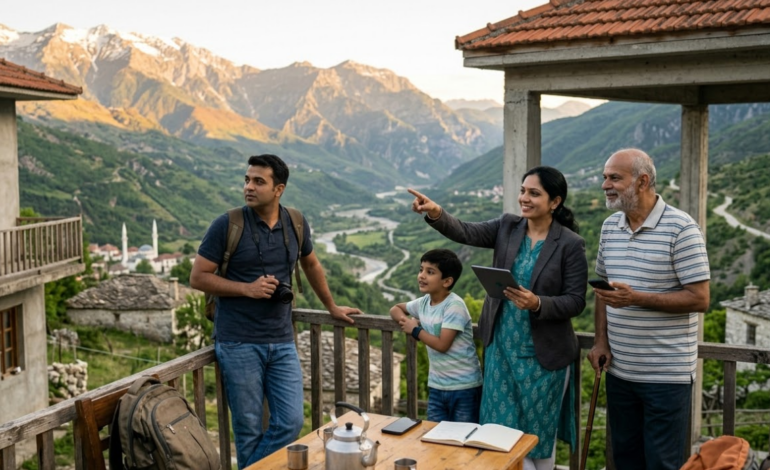
Albania is the breakout star of 2026. Its coastline, the “Albanian Riviera,” rivals the beauty of Greece but at a massive discount.
-
For US Travelers: Daily costs hover around $45–$55. You can find beachfront stays for $30 a night that would cost $150 in Italy.
-
For Indian Travelers: While flights are the biggest expense (approx. ₹65,000), on-ground costs are so low that a 10-day Balkan loop is often cheaper than a week in Western Europe.
-
2026 Highlight: The newly opened international airport in Vlorë has made the southern beaches much more accessible for budget airlines.
5. Georgia: The Nomad’s Sanctuary
Located at the intersection of Europe and Asia, Georgia offers snow-capped mountains, ancient wine culture, and a 1-year visa-free stay for many Westerners.
-
For US Travelers: A very comfortable daily spend is $40–$50. Tbilisi has become a world-class hub for digital nomads, offering high-speed internet and cheap coworking spaces.
-
For Indian Travelers: Georgia is a “Mid-Budget” favorite. A 7-day trip costs around ₹85,000–₹1,10,000. Note that e-visa approvals for Indians have become more consistent in 2026.
-
2026 Highlight: The “Wine Express” train allows travelers to visit the Kakheti wine region for less than $10 round-trip.
6. Egypt: History at a Discount
Following currency devaluations in previous years, Egypt remains an incredible value in 2026 for those with “Hard Currency” (USD/EUR).
-
For US Travelers: You can explore Cairo, the Pyramids, and Luxor for $40–$60 a day. A 5-star Nile Cruise that used to be a “once-in-a-lifetime” splurge is now accessible for mid-range budgets.
-
For Indian Travelers: Egypt is a high-value cultural trip. Expect to spend ₹80,000–₹1,20,000 for a full 10-day historical tour, including flights.
-
2026 Highlight: The Grand Egyptian Museum (GEM) is fully operational, and while ticket prices have increased, the surrounding area offers plenty of budget-friendly “Pyramid View” hostels.
7. Indonesia: Beyond Bali
While Bali remains the magnet, travelers in 2026 are finding better value in Yogyakarta (Java) and Lombok.
-
For US Travelers: Indonesia is the “Value Champion” for long stays. A daily budget of $30–$45 is the norm. In Yogyakarta, you can find boutique hotels for $25 a night.
-
For Indian Travelers: Bali remains the primary target. A 6-day Bali “Comfort” trip costs around ₹65,000–₹90,000.
-
2026 Highlight: The “Whoosh” high-speed rail now connects Jakarta to Bandung in minutes, allowing budget travelers to see more of Java without expensive domestic flights.
8. Sri Lanka: The Island Resilience
Sri Lanka has made a massive tourism comeback. In 2026, it offers the best “Nature-to-Dollar” ratio in South Asia.
-
For US Travelers: A daily spend of $35–$50 allows for train travel through tea plantations, surfing in Arugam Bay, and eating world-class seafood.
-
For Indian Travelers: This is one of the cheapest “Flight+ Stay” combos. Total 7-day budget: ₹35,000–₹55,000.
-
2026 Highlight: The Colombo-to-Ella train remains one of the cheapest “World Class” experiences at under $10 for a reserved seat.
9. Colombia: South America’s Best Value
For those in the Western Hemisphere, Colombia is the 2026 king of the “South American Circuit.”
-
For US Travelers: Medellín and Bogotá offer a vibrant urban life for $40–$55 a day. The exchange rate remains favorable for the USD.
-
For Indian Travelers: The long flight (₹1.2L+) makes this a “Mega-Trip” only. However, once you arrive, your daily spend will be lower than in most Southeast Asian cities.
-
2026 Highlight: The “Coffee Axis” (Eje Cafetero) has expanded its glamping options, offering high-end stays for budget prices ($50/night for luxury tents).
10. Turkey (Türkiye): The Bridge of Value
Despite high inflation, the lira’s exchange rate keeps Turkey competitive for international travelers in 2026.
-
For US Travelers: Istanbul is a mid-range city, but the coast (Antalya/Fethiye) and Cappadocia offer great value at $55–$75 a day.
-
For Indian Travelers: A popular “Bucket List” destination. A 7-day Istanbul + Cappadocia trip averages ₹90,000–₹1,40,000.
-
2026 Highlight: Public transport within Istanbul has been vastly upgraded, making the expensive private taxis unnecessary for budget-conscious explorers.
2026 Budget Comparison Table (Daily Spend)
| Country | USD Budget (Backpacker) | INR Budget (Comfort) | Primary “Value” Factor |
| Vietnam | $35 | ₹4,500 | World-class street food & low-cost stays. |
| Nepal | $25 | ₹2,500 | Epic mountains for the price of a city dinner. |
| Thailand | $45 | ₹6,500 | Massive competition keeps prices low. |
| Albania | $45 | ₹7,000 | The most affordable beach life in Europe. |
| Egypt | $40 | ₹5,500 | Currency advantage for foreign visitors. |
| Sri Lanka | $35 | ₹4,000 | Low-cost internal transport & diverse nature. |
FAQ: Budget Travel in 2026
Q: Is it cheaper to book 2026 travel last-minute or in advance?
A: In 2026, advance booking (3–4 months) is essential. Post-pandemic “Revenge Travel” has settled, but flight capacity hasn’t fully kept up with demand, meaning “Last Minute” deals are rare on popular budget routes.
Q: How do I handle money in these countries to avoid fees?
A: Use “Neo-banks” like Revolut, Monzo, or India’s Fi/Jupiter. These offer the interbank exchange rate and often allow for a certain amount of free international ATM withdrawals, which can save you $20–$50 over a week-long trip.
Q: Is “Safety” a hidden cost in these budget countries?
A: Safety is subjective, but in 2026, destinations like Vietnam, Thailand, and Georgia are ranked as exceptionally safe for solo travelers. Countries like Egypt and Colombia require more “Street Smarts,” but are perfectly safe if you stick to established tourist zones.
Q: Should I worry about 2026 inflation?
A: Yes, especially in Turkey and Egypt. Always check the “Big Mac Index” or local meal prices on sites like Numbeo a week before you fly to ensure your budget is still realistic.
Summary: Scaling Your Adventures
The secret to budget travel in 2026 isn’t just about spending less; it’s about Strategic Scaling. By choosing a country like Vietnam or Albania, you aren’t just saving money—you are increasing the quality of your experience.
Expert Tip: Financial health and physical health are two sides of the same coin. Just as you plan your travel budget, plan your metabolic health for those long mountain treks. Check out our 2026 Guide to Wearable Glucose Monitoring to stay fit while you explore.