
How to Practice Forest Bathing for Ultimate Stress Relief

To understand why forest bathing is so effective, you must separate it from the Western concept of “outdoor exercise.” When you go for a hike to burn calories or reach a mountain peak, your brain is still in an active, goal-oriented state. Forest bathing is the exact opposite. It is the practice of arriving, slowing down, and allowing the biological compounds of nature to interact directly with your nervous system.
The modern professional is caught in a relentless cycle of digital hyper-connectivity, economic pressure, and urban isolation. Whether you are an entrepreneur in the USA, a software developer in India, or a financial analyst in Europe, the human nervous system was simply not evolved to process the sheer volume of notifications, blue light, and algorithmic demands of the current digital age.
When chronic stress elevates your cortisol levels, it degrades your immune system, ruins your sleep architecture, and impairs your cognitive function. While many turn to expensive supplements, complex wellness retreats, or medication to manage this burnout, one of the most scientifically validated stress-reduction protocols in the world is entirely free: Forest Bathing.
Originating in Japan in the 1980s as Shinrin-yoku (which translates literally to “taking in the forest atmosphere”), forest bathing is not about hiking, jogging, or tracking your heart rate on a smartwatch. It is the conscious, mindful practice of immersing your senses in a natural environment.
This comprehensive guide breaks down the biological science behind forest bathing, provides exact steps to practice it regardless of where you live, and explains how to integrate this ancient practice into a highly demanding modern lifestyle.
Learn the Biological Science Behind Shinrin-Yoku
The profound stress-relieving effects of forest bathing are not just psychological placebo; they are deeply rooted in biochemistry and human physiology.
The Power of Phytoncides
Trees and plants emit invisible, volatile organic compounds called phytoncides. These are essential oils that trees use to protect themselves from insects, bacteria, and fungal diseases. When humans walk through a forest and breathe in these compounds, it triggers a remarkable biological response. Extensive research conducted by the Nippon Medical School in Tokyo has demonstrated that inhaling phytoncides significantly increases the number and activity of human Natural Killer (NK) cells. NK cells are a type of white blood cell that act as your body’s rapid-response team against virus-infected cells and tumor formation. A single weekend of forest bathing has been shown to boost NK cell activity for up to 30 days.
Shifting the Nervous System
Chronic stress keeps your body trapped in the sympathetic nervous system (the “fight or flight” mode). In this state, your heart rate is elevated, digestion is suppressed, and cortisol floods your bloodstream. Forest bathing actively engages the parasympathetic nervous system (the “rest and digest” mode). By exposing your brain to the fractal patterns of tree branches, the acoustic frequencies of birdsong, and the soft textures of the forest floor, your body receives environmental signals that it is safe. Blood pressure drops, heart rate variability (HRV) improves, and the adrenal glands stop pumping out stress hormones.
Counteracting Digital Burnout
We are spending more time managing automated software, staring at screens, and learning tools like How to Use Excel AI Agents than we are interacting with the physical world. This screen time disrupts our biological clocks. Spending time under the natural, filtered light of a forest canopy is one of the most effective ways to reset your internal clock, acting as a natural extension to the indoor protocols discussed in our Circadian Rhythm Lighting Guide.
Steps to Master the Art of Forest Bathing
You do not need to travel to a remote Japanese cedar forest to experience the benefits of Shinrin-yoku. You simply need a cluster of trees and the willingness to completely alter your pace. Follow these steps to execute a proper forest bathing session.
Step 1: Disconnect Completely (The Digital Fast)
Forest bathing cannot occur if your brain is anticipating a notification. You must leave your phone in the car, or at the very least, turn it entirely off and bury it at the bottom of your bag. Do not bring a camera. Do not bring headphones to listen to a podcast. The goal is to remove all digital mediation between you and your environment.
Step 2: Abandon Your Destination
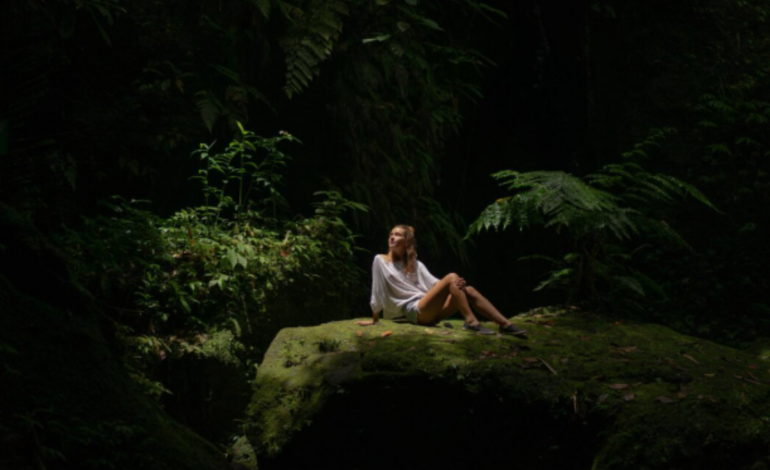
When you enter the woods, leave your goals behind. You are not trying to reach a waterfall, complete a 5K loop, or get your step count in. Let your body guide you. Walk aimlessly and slowly. If you feel drawn to a particular grove of trees, a mossy rock, or a patch of sunlight, stop and stay there.
Step 3: Engage the Five Senses
The core methodology of Shinrin-yoku is sensory immersion. Actively cycle through your senses to ground yourself in the present moment:
-
Sight: Look at the varied shades of green. Notice the fractal patterns in the leaves and the way the sunlight filters through the canopy (a phenomenon the Japanese call Komorebi).
-
Hearing: Close your eyes and isolate the sounds. Listen for the wind rustling the branches, the crunch of twigs under your feet, or the distant sound of water.
-
Smell: Take slow, deep breaths drawn from your diaphragm. Smell the damp earth, the pine needles, and the rich, complex aroma of the soil. This is how you absorb the immune-boosting phytoncides.
-
Touch: Place your hands on the bark of a tree. Dip your fingers into a cold stream. Take off your shoes and let your bare feet connect with the grass (grounding).
-
Taste: While you should not forage without expertise, you can taste the freshness of the air as you breathe deeply, noticing how it feels different on your tongue compared to stagnant city air.
Step 4: The “Sit Spot” Practice
Find a comfortable place to sit—on a log, a rock, or directly on the ground. Remain in this single spot for at least 15 to 20 minutes. As you sit quietly, the forest, which may have gone quiet when you approached, will slowly return to its baseline state. Birds will return to the branches above you, and small wildlife will resume their routines. Observing this undisturbed ecosystem is profoundly calming for the human mind.
How to Practice Forest Bathing in Urban Environments
Not everyone has immediate access to a sprawling national park. For those living in dense urban centers like Mumbai, New York, or London, the principles of forest bathing can still be adapted.
Step 1: Utilize Botanical Gardens and Urban Parks
City parks with mature, old-growth trees still emit phytoncides and offer the visual relief of green spaces. Seek out the most densely wooded area of your local park, away from traffic noise and playground areas.
Step 2: Micro-Dosing Nature
If you only have 15 minutes during your lunch break, use it. Step away from your desk, find a single tree or a small garden patch, and practice the sensory engagement steps. Even brief exposure to natural elements can lower blood pressure and improve afternoon focus.
Step 3: The Indoor Adaptation
If you are entirely housebound or living in a concrete jungle with zero access to green space, bring the outdoors inside. Fill your workspace with diverse house plants. Diffuse high-quality essential oils derived from trees, such as hinoki cypress, cedarwood, or pine. While not a perfect substitute for the complex ecosystem of a forest, these olfactory cues can still trigger a mild parasympathetic relaxation response.
Learn the Compounding Health and Lifestyle Benefits
Integrating forest bathing into your weekly routine creates a compounding effect on your overall wellness and financial stability.
Cardiovascular and Metabolic Health
By chronically lowering cortisol and adrenaline, regular forest bathing reduces the wear and tear on your cardiovascular system. Studies have shown consistent drops in baseline blood pressure and improved metabolic function in individuals who spend just two hours a week in nature. For those optimizing their physical health using advanced methods like Peptides for Muscle Recovery or managing their blood sugar with the Best Wearable Glucose Monitors, forest bathing provides the necessary baseline of autonomic nervous system balance.
Free Cognitive Restoration
When you are struggling with financial anxiety, stress management often feels like a luxury reserved for those who can afford expensive therapy or spa days. Forest bathing is entirely free. It requires zero subscription fees, no specialized equipment, and no personal trainers. If you are currently restructuring your life using strategies from our guide on How to Save Money Fast on a Low Income, utilizing the forest as your primary mental health resource is one of the most effective ways to maintain your resilience without breaking the budget.
Enhanced Professional Focus
Mental fatigue is the enemy of productivity. When you spend all week managing complex digital workflows or overseeing autonomous systems like How Anthropic’s Claude Can Now Control Your Computer to Rival OpenClaw, your brain experiences “directed attention fatigue.” Forest bathing provides “soft fascination”—stimuli that capture your attention effortlessly, allowing the analytical, problem-solving parts of your brain to rest and repair. When you return to your desk on Monday, your capacity for deep work and creative problem-solving is drastically restored.
FAQ: Forest Bathing
How long should a forest bathing session last? Aim for at least 2 hours to experience full physiological benefits, though even 20 minutes can significantly lower your heart rate.
Do I need a certified forest therapy guide? No, you can practice independently by simply walking slowly and engaging your senses without digital distractions.
Can I listen to music while forest bathing? No, blocking the natural acoustic environment with headphones defeats the purpose of sensory immersion in the ecosystem.
Is forest bathing the same as hiking? No, hiking is a physical workout with a destination, while forest bathing is a slow, aimless, sensory-focused meditation.
What if there are no forests near my city? Utilize large urban parks, botanical gardens, or any quiet green space with mature trees and minimal concrete.
Summary: Reclaiming Your Biological Baseline
In a world that demands constant output, speed, and digital engagement, forest bathing is an act of radical rebellion. It is a scientifically validated methodology for lowering your stress hormones, boosting your immune system, and restoring your cognitive clarity. By understanding the biological impact of phytoncides and dedicating just a few hours a week to mindful sensory immersion, you can build an impenetrable buffer against the burnout of modern life.
As you optimize your mental health through nature, ensure your financial health is equally protected by understanding the structural shifts in the economy. Explore our deep dive into The Rise of AI Agents for Small Business to leverage technology efficiently, or secure your future capital by learning How to Mitigate P2P Lending Risks Globally.