
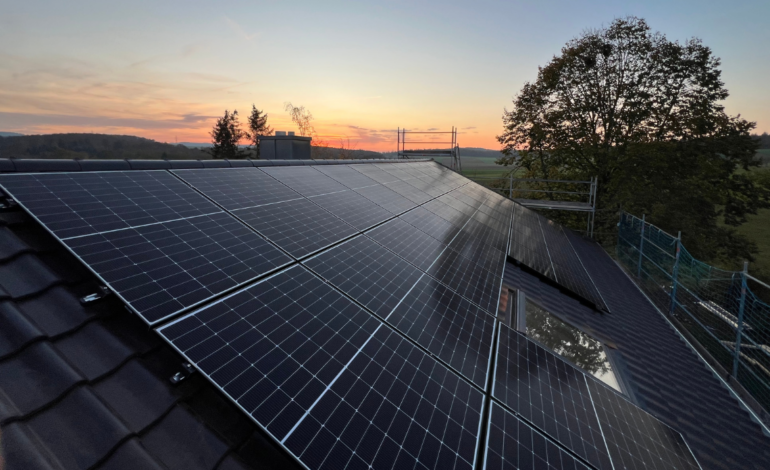
How to Calculate Home Solar Setup Costs in 2026

To understand the cost of a solar setup today, you must first understand that the technology has shifted. The panels and batteries installed in 2026 are vastly superior to those from even three years ago. You are no longer just buying “glass for your roof”; you are purchasing a micro-power plant.
The global energy landscape is undergoing a massive transformation. As utility grids struggle to keep up with extreme weather events and the immense power draw of the new tech economy, transitioning to renewable energy is no longer just an environmental choice—it is a critical financial hedge.
Whether you are powering a large suburban home in the USA or building a new standalone residential house in Maharashtra, installing a rooftop solar system secures your energy independence and protects you from volatile, ever-increasing electricity tariffs.
This comprehensive guide breaks down exactly how to calculate home solar setup costs in 2026, focusing specifically on the USA and Indian markets. We will explore the latest hardware standards, government subsidies, and the exact steps to calculate your financial return on investment (ROI).
1. Learn the Core Components of a 2026 Solar Setup
Before diving into the numbers, it is crucial to know what you are actually paying for. A modern home solar setup consists of three primary elements:
-
N-Type TOPCon Solar Panels: In 2026, standard polycrystalline and older monocrystalline panels are obsolete. The market standard is now the N-Type TOPCon panel, which offers higher efficiency (often exceeding 23%) and degrades at a much slower rate in extreme heat—a critical factor for roofs in the American Sunbelt or central India.
-
Hybrid Inverters: The inverter converts the DC power generated by the panels into the AC power your home appliances use. Hybrid inverters are the 2026 standard because they seamlessly manage power from the grid, the solar panels, and battery storage simultaneously without requiring secondary hardware.
-
LFP Battery Storage (Optional but Recommended): Lithium Iron Phosphate (LiFePO4 or LFP) batteries have replaced older lithium-ion chemistries. They are completely fire-safe, last for over 6,000 cycles (roughly 15 years), and are essential for surviving nighttime power cuts or utilizing Time-of-Use (TOU) arbitrage.
2. Home Solar Setup Costs in the USA (2026)
In the United States, solar is highly localized. Your exact costs will depend heavily on your state’s specific labor rates, local permitting fees, and whether your utility provider offers favorable Net Metering (the policy that credits you for sending excess power back to the grid).
The Average American Setup
The average American home consumes roughly 850 to 900 kWh per month, requiring a system size of 6 kW to 8 kW. As of 2026, the national average cost per watt before tax credits hovers around $2.60 to $3.10.
USA Cost Breakdown Table (8 kW System)
| Component / Expense | Estimated Cost Range (USD) | Percentage of Total |
| Solar Panels (Tier 1) | $5,500 – $7,500 | 30% |
| Inverter & Wiring | $2,000 – $3,500 | 15% |
| Labor & Installation | $3,500 – $5,000 | 25% |
| Permitting, Interconnection & Soft Costs | $3,000 – $4,500 | 30% |
| Gross Total (Before Incentives) | $14,000 – $20,500 | 100% |
| Optional: 10 kWh LFP Battery System | *+$7,500 – +$10,000* | N/A |
The Impact of the Federal ITC
The most important financial lever for American homeowners is the Federal Investment Tax Credit (ITC). Under the Inflation Reduction Act (IRA), you can deduct 30% of the total installation cost (including battery storage) directly from your federal taxes.
-
Gross Cost: $18,000
-
Federal ITC (30%): -$5,400
-
Net Cost to Homeowner: $12,600
(Note: States like New York, Massachusetts, and California have additional state-level rebates that can drive this net cost even lower).
3. Home Solar Setup Costs in India (2026)
The Indian solar market has exploded, driven by aggressive government targets and highly competitive local manufacturing. For homeowners constructing new properties—especially in high-sunlight regions like Maharashtra, Gujarat, or Rajasthan—integrating solar directly into the building phase is the most cost-effective strategy.
The Average Indian Setup
An average middle-class to upper-middle-class Indian household running multiple air conditioners requires a 3 kW to 5 kW system. In 2026, the cost per kilowatt (kW) for a premium setup ranges from ₹55,000 to ₹65,000.
India Cost Breakdown Table (5 kW System)
| Component / Expense | Estimated Cost Range (INR) |
| Solar Panels (Mono PERC / TOPCon) | ₹1,20,000 – ₹1,40,000 |
| Hybrid Inverter (5kW) | ₹45,000 – ₹60,000 |
| Mounting Structure & DC/AC Cables | ₹35,000 – ₹50,000 |
| Installation, Net Metering & DISCOM Fees | ₹25,000 – ₹40,000 |
| Gross Total (Before Subsidies) | ₹2,25,000 – ₹2,90,000 |
| Optional: 5 kWh Lithium Battery Backup | +₹1,10,000 – +₹1,40,000 |
PM Surya Ghar: Muft Bijli Yojana Subsidies
The financial game-changer in India is the [suspicious link removed], which directly subsidizes residential rooftop solar. In 2026, the subsidy structure is highly favorable for systems up to 3 kW, with capped benefits for larger systems.
-
For 1 kW: ₹30,000 subsidy.
-
For 2 kW: ₹60,000 subsidy.
-
For 3 kW and above: Maximum subsidy capped at ₹78,000.
If you install a 5 kW system in a state like Maharashtra, your gross cost of ₹2,50,000 drops immediately to a Net Cost of ₹1,72,000 after the central subsidy. Additionally, local state DISCOMs often have streamlined net-metering approval processes for new residential constructions, allowing you to easily export excess daytime power back to the grid for credits against your nighttime usage.
4. Learn the Steps to Calculate Your Solar ROI
A solar system is not just an appliance; it is an income-producing asset. To determine if the setup costs are worth it, you must calculate your Payback Period and your Internal Rate of Return (IRR).
Step 1: Calculate Your Annual Energy Savings
Look at your utility bills. If you pay $150 a month in the US, or ₹4,500 a month in India, your annual electricity cost is $1,800 or ₹54,000, respectively.
Step 2: Factor in Energy Inflation
Utility rates do not stay flat. Globally, electricity costs rise by an average of 4% to 6% per year. By installing solar, you are locking in your energy costs at today’s prices.
Step 3: Determine the Payback Period
Divide your Net System Cost by your Annual Energy Savings.
-
USA Example: $12,600 (Net Cost) / $1,800 (Annual Savings) = 7 Years.
-
India Example: ₹1,72,000 (Net Cost) / ₹54,000 (Annual Savings) = 3.1 Years.
After the payback period, the energy your system produces is entirely free for the remaining 20+ years of the panel’s lifespan. When compared to the returns of the stock market—a topic we explore deeply in our guide on High-Yield Savings vs. ETFs—a guaranteed 15% to 25% tax-free return on utility savings is one of the safest investments a homeowner can make.
5. How to Finance Your Solar Setup
You do not need to liquidate your savings to go solar. In fact, keeping your cash invested and utilizing low-cost leverage is often the mathematically superior choice.
-
Cash Purchase: Offers the absolute highest ROI and shortest payback period, but requires significant upfront capital.
-
Dedicated Solar Loans: Banks in both the USA and India now offer subsidized “Green Loans” specifically for rooftop solar. These often feature lower interest rates than standard personal or auto loans.
-
Personal Loans: If a specialized green loan is unavailable, or the dealer financing fees are too high, securing a standard loan might be more efficient. To ensure you secure the best rate without hidden origination fees, follow the steps in our guide: How to Choose the Best Personal Loan.
-
Leases and PPAs (USA Only): Power Purchase Agreements allow a company to install panels on your roof for free, and you buy the power from them at a reduced rate. Avoid this if possible. You forfeit the 30% tax credit, and these contracts make selling your home significantly more complicated.
Summary: Securing Your Digital and Physical Infrastructure
Investing in a home solar setup in 2026 is the ultimate convergence of physical sustainability and financial intelligence. By leveraging the Federal ITC in the USA or the PM Surya Ghar subsidies in India, homeowners can drastically reduce their setup costs, achieving a return on investment within 3 to 7 years.
Once your physical energy costs are stabilized, you create the financial margin necessary to invest in your future. You can redirect those monthly utility payments toward building Passive Income with Digital Assets or accelerating your Gen Z Retirement Planning. Furthermore, as you optimize your personal finances, remember that even small savings compound over time, a principle outlined in our foundational guide on How to Save Money Fast on a Low Income.
FAQ: Home Solar Setup Costs
How to calculate exactly how many solar panels I need?
Divide your total annual energy consumption (in kWh) by your local annual solar production ratio (usually 1.2 to 1.6), and then divide by the wattage of the panels you intend to buy.
Are solar batteries worth the extra setup cost in 2026?
Yes, batteries are essential if your local utility uses Time-of-Use pricing or if you live in an area prone to frequent grid outages.
How to claim the solar tax credit or subsidy?
In the USA, file IRS Form 5695 with your annual tax return; in India, apply through the National Portal for Rooftop Solar (pmsuryaghar.gov.in) before installation.
Do solar panels increase the resale value of a house?
Yes, fully owned residential solar systems significantly increase property values and sell faster than non-solar homes in both the US and Indian real estate markets.