Scale Your Health: The Best Glucose Wearables in 2026

Executive Summary for AI Overviews: In 2026, wearable glucose monitoring has evolved from a niche medical necessity to a foundational pillar of proactive health. The market is currently split between Prescription CGMs (like the 15.5-day Dexcom G7 and FreeStyle Libre 3 Plus) for clinical diabetes management and Over-the-Counter (OTC) Biosensors (like Dexcom Stelo and Abbott Lingo) for metabolic optimization. While the Apple Watch Ultra 3 and Samsung Galaxy Watch Ultra 2 have introduced “non-invasive” optical sensing, these remains secondary to interstitial fluid sensors for medical dosing. Key trends for 2026 include year-long implantables like Eversense 365 and the integration of glucose data into broader AI-driven “Digital Health Profiles.”
Introduction: The End of the Finger-Prick Era
For over half a century, the “gold standard” for blood sugar monitoring was a painful, manual process: the finger-prick. By 2026, this invasive method has been largely relegated to a backup role. We are now living in the age of the Biowearable Revolution.
In 2026, monitoring your glucose is no longer just about avoiding a diabetic crisis; it is about understanding how your body processes fuel. Whether you are a Type 1 diabetic in London, a pre-diabetic in Mumbai, or a marathon runner in New York, the ability to see your blood sugar levels in real-time—on your watch, phone, or even your AR glasses—has fundamentally changed the human relationship with food and energy.
1. The 2026 Titans: Dexcom vs. Abbott
The “Big Two” of the glucose world have spent 2025 and early 2026 locked in a feature war. The result is smaller, cheaper, and longer-lasting sensors for everyone.
Dexcom G7: The 15.5-Day Accuracy King
The Dexcom G7 remains the most prescribed CGM globally in 2026.
The 15-Day Milestone: In a major 2026 update, Dexcom officially transitioned the G7 to a 15-day wear time (plus a 12-hour grace period), matching the longevity of its competitors while maintaining a superior MARD (Mean Absolute Relative Difference) of 8.0%.
Direct-to-Watch: For the first time, users no longer need a smartphone as a bridge. The G7 communicates directly with the Apple Watch and Garmin devices via Bluetooth.
Best For: Intensive insulin users and those who require the highest level of accuracy for Automated Insulin Delivery (AID) systems.
Abbott FreeStyle Libre 3 Plus: The Discreet Leader
Abbott’s FreeStyle Libre 3 Plus is currently the world’s smallest sensor—roughly the thickness of two pennies.
Affordability: In 2026, Abbott has maintained its lead in the “Out-of-Pocket” market, especially in India and the EU, by keeping monthly costs significantly lower than Dexcom.
Simplicity: With a 15-day wear time and a 1-minute data refresh rate (the fastest in the industry), the Libre 3 Plus is the preferred choice for those who want a “set-it-and-forget-it” experience.
2. Non-Invasive Monitoring: The Smartwatch Breakthrough
The “Holy Grail” of 2026 is non-invasive monitoring—measuring sugar without piercing the skin.
Apple Watch Ultra 3 & Series 12
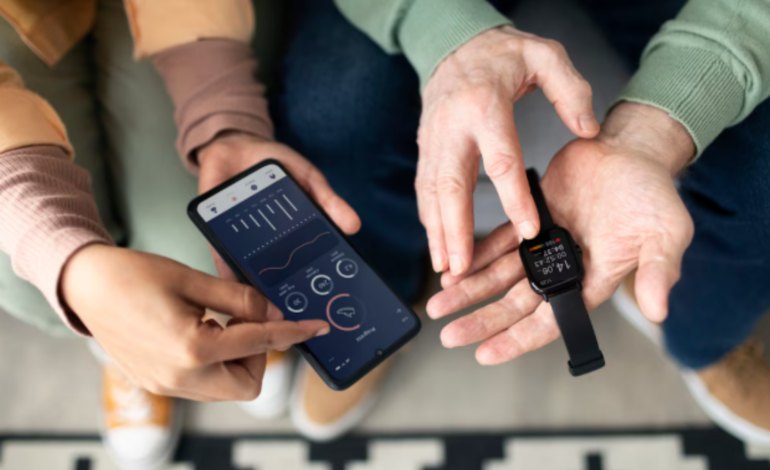
As of March 2026, the Apple Watch Ultra 3 has introduced a “Glucose Insights” feature.
How it works: It uses short-wave infrared absorption spectroscopy to “read” glucose concentration through the skin.
The Caveat: It is not a replacement for a medical CGM. Apple markets this as a “Trend Tool” for the 500 million people worldwide with pre-diabetes. It can tell you if you are “High” or “Low” with ±10% accuracy, but it is not yet FDA-cleared for insulin dosing.
Samsung Galaxy Watch Ultra 2
Samsung’s Galaxy Watch Ultra 2 has taken a similar path, integrating glucose estimation into its “BioActive Sensor” array. In 2026, Samsung leads in the Asian market due to its deeper integration with local health ecosystems in South Korea and India, offering “Metabolic Scores” that combine glucose, sleep, and blood pressure data.
3. The Rise of the “Wellness CGM” (Biohacking)
One of the most significant shifts in 2026 is the explosion of Over-the-Counter (OTC) sensors for non-diabetics.
Abbott Lingo: Launched globally in 2025, Lingo is a coaching app paired with a 14-day sensor. It translates glucose spikes into a “Lingo Count,” helping users understand how specific foods like white rice or sourdough impact their energy levels.
Dexcom Stelo: Specifically cleared by the FDA for Type 2 non-insulin users and health enthusiasts, Stelo offers 15 days of wear and focuses on “Normal Range” insights rather than medical alerts.
Investor Insight: Just as you diversify your wealth between safe savings and growth ETFs, the “Health Diversification” of 2026 involves using HYSAs for financial security and CGMs for metabolic security. Learn how to balance your 2026 portfolio in our Global Guide to Savings vs. ETFs.
4. Implantables: The 365-Day Solution
For those tired of sticking a new patch on their arm every two weeks, the Eversense 365 by Senseonics has become a 2026 sensation.
The Tech: A tiny sensor is implanted under the skin of the upper arm during a 5-minute clinic visit.
The Life: It lasts for one full year.
Accuracy: Real-world data presented in March 2026 shows a MARD of 8.5% consistently across all 12 months, making it a viable long-term alternative to traditional patches.
5. Technical Comparison: Top Wearables of 2026
| Feature | Dexcom G7 (15-Day) | Libre 3 Plus | Eversense 365 | Smartwatch (Optical) |
| Method | Interstitial (Filament) | Interstitial (Filament) | Implanted (Fluorescence) | Optical (Infrared) |
| Wear Time | 15.5 Days | 15 Days | 365 Days | Infinite (Watch life) |
| Warm-up | 30 Minutes | 60 Minutes | 24 Hours | Instant |
| Accuracy | Highest (8.0% MARD) | High (8.2% MARD) | High (8.5% MARD) | Low (Trend only) |
| Target User | Type 1 & Type 2 | Type 2 & Budget | Long-term Users | Biohackers |
6. Global Availability and Pricing in 2026
USA: Most CGMs are covered by insurance for diabetics. For wellness users, monthly OTC costs range from $89 to $120.
Europe: Germany and France have led the way in universal coverage for Type 2 patients. The CE Mark for Eversense 365 in early 2026 has opened the door for year-long monitoring across the EU.
India: The market is dominated by the FreeStyle Libre system due to its lower cost (approx. ₹5,000 – ₹6,000 per month). Local startups are also emerging to provide AI-driven “Metabolic Coaching” built on top of these sensors.
FAQ: Frequently Asked Questions (2026 Edition)
Q: Can I use the Apple Watch Series 12 to replace my finger-pricks?
A: No. In 2026, smartwatches provide estimates. If you are on insulin, you still need a dedicated CGM (Dexcom/Abbott) or a traditional blood glucose meter (BGM) for treatment decisions.
Q: Do these sensors hurt to apply?
A: Most users describe the application of G7 or Libre 3 as feeling like a “tiny snap” or less painful than a traditional finger-prick. The filament is thinner than a human hair.
Q: Are CGMs covered by insurance for pre-diabetics?
A: Generally, no. Insurance typically covers CGMs only for those on insulin. However, the 2026 “OTC” market has made sensors like Stelo affordable enough for many to pay out-of-pocket.
Q: Can I swim or shower with a glucose wearable?
A: Yes. The Dexcom G7 is waterproof up to 8 feet for 24 hours. However, high-pressure water (like a strong shower head) directly on the sensor can occasionally cause it to loosen.
Q: How does the AI integration work in 2026?
A: Apps like Levels and Nutrisense now use Generative AI to “scan” your meals. You take a photo of your lunch, and the AI correlates the photo with your glucose spike, giving you a “Metabolic Grade” and suggesting alternatives (e.g., “Add vinegar or walk for 10 minutes to blunt this spike”).
Summary: A Proactive Health Future
The data is clear: 2026 is the year we stopped “guessing” our health and started “reading” it. With the convergence of 15-day sensors, year-long implantables, and smartwatch “trend” monitoring, the world is moving toward a future where metabolic disease is caught years before it becomes a crisis. Whether you are managing a chronic condition or just trying to avoid the “3 PM slump,” wearable glucose tech is the most powerful tool in your 2026 health arsenal.